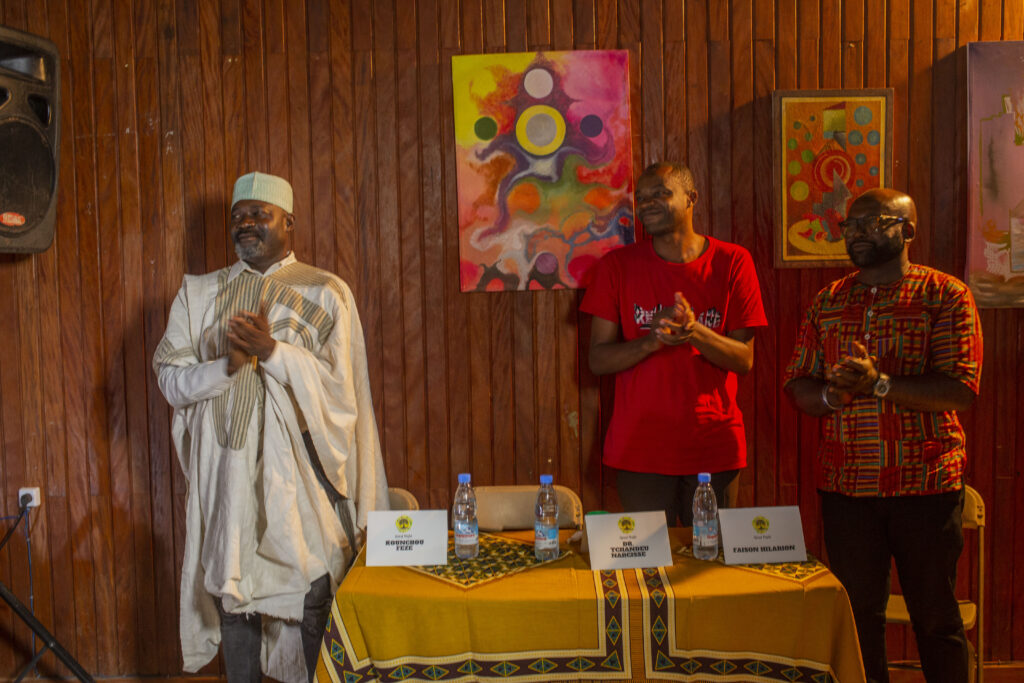
Promoting Abstract Painting in University Art Departments from an African and Global South Perspective
Universities across Africa and the Global South occupy a unique cultural position. They are not only centres of academic learning, but also custodians of memory, identity, and collective imagination. Within Departments of Arts, this responsibility extends to nurturing creative practices that speak directly to local realities while remaining in conversation with global artistic discourse. One powerful way to strengthen this mission is by bringing communities, art specialists, and artists together to promote abstract painting as a shared cultural and intellectual practice. This is the Core value of the Astral Night Project organise by the CelleAbstral Arts Movement.
Abstract Painting as Indigenous and Contemporary Language
In many African and Global South contexts, abstraction is not a foreign or imported concept. Long before modern art movements, abstraction existed in symbols, patterns, textiles, body markings, architecture, spiritual iconography, and ritual objects. These visual systems communicated history, cosmology, ethics, and social structure without relying on literal representation.
Positioning abstract painting within university art departments allows students to reconnect contemporary practice with these indigenous visual languages. Abstraction becomes a space where ancestral knowledge meets modern expression, affirming cultural continuity while encouraging innovation.
Communities as Living Archives
Communities in the Global South are living archives of knowledge, experience, and resilience. When universities open their art departments to surrounding communities and the voice of the people abstract painting becomes a tool for collective storytelling, capturing emotions, environmental realities, migration histories, and social transformation in ways that words alone cannot.
Community painting Exhibition, open studios, and collaborative exhibitions enable students to learn directly from lived experience. In this context, abstraction allows diverse voices to coexist without hierarchy, making it especially powerful in multilingual and multicultural societies.
The Role of Art Specialists and Decolonial Pedagogy
At the Astral Night, Art specialists and academics in African and Global South universities play a crucial role in reshaping how abstract painting is taught and understood. By embracing decolonial pedagogies, specialists can move beyond Eurocentric art histories and recognize paintings as a legitimate form of indigenous knowledge production and research.
Collaborations between scholars, artists, and communities encourage curricula that value oral histories, embodied knowledge, symbolism, and collective memory. This approach positions abstract painting not only as artistic practice, but as a method of inquiry, critical thinking, and cultural preservation.
Artists as Cultural Translators
Practicing artists in the Global South often navigate multiple worlds, tradition and modernity, local and global, spiritual and political. Their engagement within university art departments allows students to witness how abstract painting can translate complex realities such as climate change, post-colonial identity, displacement, and social justice into visual form.
Artists act as cultural translators, demonstrating that abstraction is not an escape from reality, but a means of engaging it more deeply. Through mentorship, residencies, and collaborative projects, they help bridge academic knowledge and community experience.
Universities as Cultural Ecosystems
When communities, art specialists, and artists collaborate, universities evolve into cultural ecosystems rather than isolated institutions. Public exhibitions, community critiques, and interdisciplinary projects allow abstract painting to circulate beyond studio walls and academic assessment.
This ecosystem strengthens the relevance of art departments, ensuring that artistic education responds to societal needs while maintaining intellectual rigour. It also affirms the role of universities in shaping cultural narratives from within the Global South, rather than reproducing external frameworks.
A Shared Vision Forward
The Astral Night aims at Promoting abstract painting through collaborative engagement in university art departments is both an educational and cultural act. From an African and Global South perspective, it asserts that abstraction is a powerful language of memory, resistance, healing, and imagination.
By bringing together communities, art specialists, and artists, universities can cultivate creative practices that honour indigenous knowledge, embrace contemporary challenges, and contribute meaningfully to global artistic conversations. In doing so, art education becomes a space where culture is not only studied, but lived, shared, and continuously re-imagined.